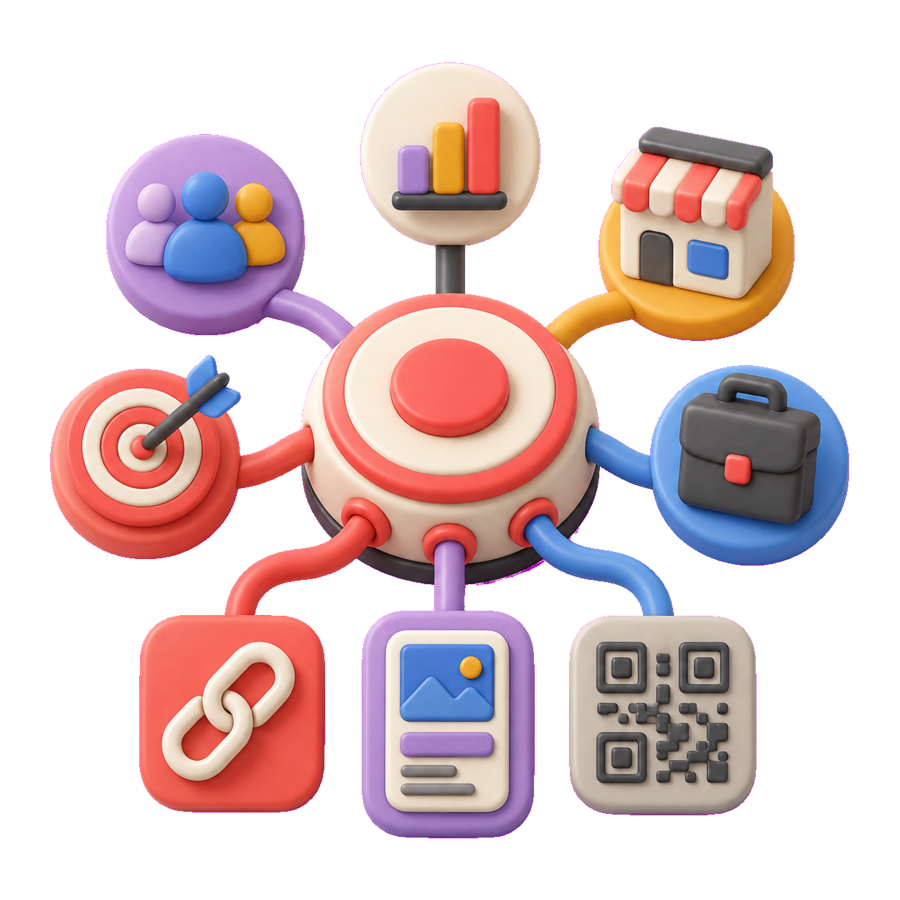
Name links for the team
Use a repeatable campaign, channel, and destination naming pattern. Clear internal names reduce accidental reuse and make later analysis easier.
Give each channel a clear campaign link, preserve your tracking parameters, and compare the visit signals available in s.id analytics.
Compare clicks across campaign links
Review available traffic-source signals
Use separate links for variants you configure
Create recognizable branded aliases
Campaign teams often publish the same journey across several channels, where long URLs, inconsistent naming, and disconnected QR codes make distribution harder to manage. The practical goal is to create a consistent path from every placement to the intended campaign destination. s.id brings short links, QR codes, microsites, and available link analytics into one connected publishing workflow without replacing the systems that own the destination experience.
Start with approved landing pages, microsites, product pages, forms, and campaign resources. Create a distinct, descriptive s.id link for each meaningful channel or placement, then use that same destination in the formats the audience needs. Across email, social, ads, partners, creators, events, and print, a stable naming convention makes links easier for teams to recognize and helps visitors understand where they are going before they click or scan.
Evaluation should stay grounded in what the product can observe. s.id can help teams compare click totals and available source, device, and location signals for distinct links. ROI, conversions, and attribution require destination, commerce, CRM, or analytics data. Keeping that boundary explicit produces cleaner reporting and avoids promising outcomes that a link-management layer cannot verify on its own.
Confirm the current, approved destination from among approved landing pages, microsites, product pages, forms, and campaign resources; remove stale or duplicate URLs before publishing.
Use a concise alias and, when available on the selected plan, an eligible custom domain that matches the campaign or resource.
Create distinct links or QR codes where comparison matters, then place them consistently across email, social, ads, partners, creators, events, and print.
Compare click totals and available source, device, and location signals for distinct links, then combine those signals with the destination system's own outcome data before changing the journey.
Treat every short link and QR code as a maintained entry point, not a one-time asset.
Use a repeatable campaign, channel, and destination naming pattern. Clear internal names reduce accidental reuse and make later analysis easier.
Pair the link or QR code with plain-language context about what opens next. Avoid ambiguous calls to action, especially for forms, portals, or sensitive topics.
Test the destination on mobile, verify campaign parameters, check QR contrast and print size, and confirm that the destination owner will keep the page current.
Start with a short link when the destination already exists, a QR code for offline access, or a microsite when the audience needs a lightweight information hub. The products can be combined, but each should solve a clear part of the journey.
Connect packaging, signage, print, and events to maintained digital destinations with QR codes, short links, and available visit signals.
Learn MoreSolutionsCreate event information pages, short registration links, and QR entry points to the event systems you already use.
Learn MoreSolutionsCoordinate launch pages, short links, QR codes, and available visit signals across product announcements and campaign channels.
Learn MoreStart for free today and see how s.id can help your business grow.