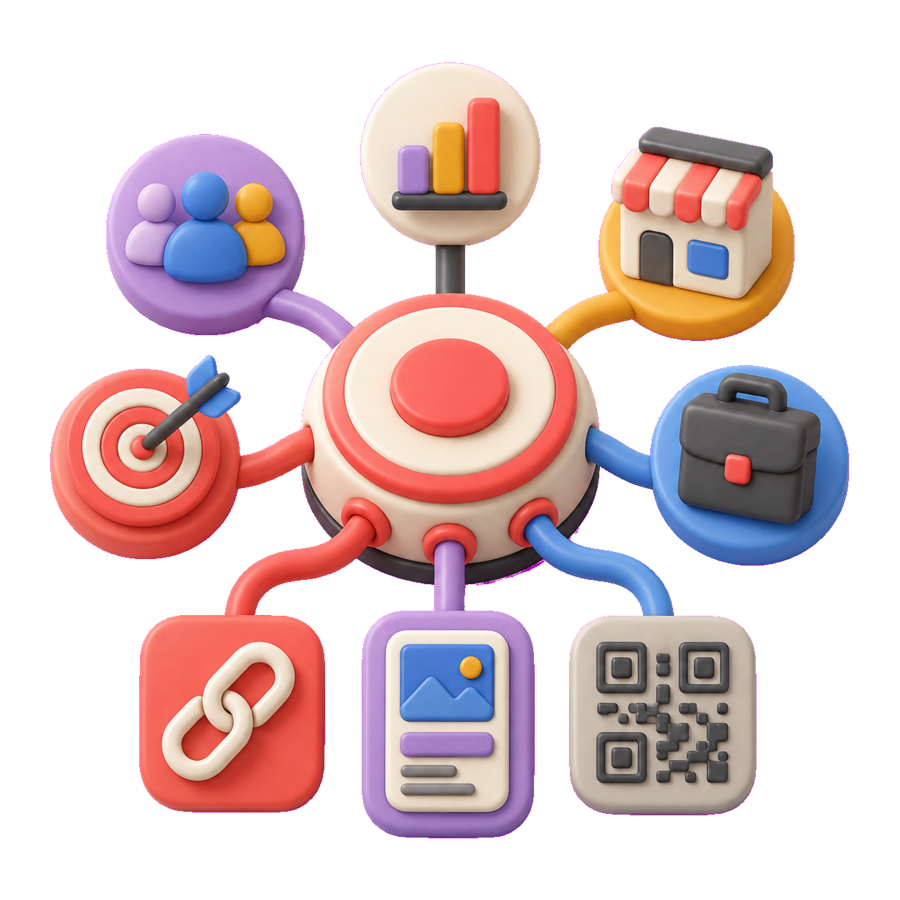
Name links for the team
Use a repeatable campaign, channel, and destination naming pattern. Clear internal names reduce accidental reuse and make later analysis easier.

Dorong jualan dengan pautan yang boleh dikesan. Buat URL produk pendek, pautan ahli gabungan dan kempen promosi.
Jejaki klik pautan produk
Pautan daftar keluar berjenama
Penjejakan program gabungan
Analisis prestasi kempen
Buat pautan pendek berjenama untuk kempen anda
Hubungkan bahan bercetak dan interaksi fizikal kepada pautan s.id
Bina halaman pendaratan tanpa pengekodan
Jejaki klik, lokasi dan data peranti
Gunakan domain anda sendiri untuk pautan berjenama
Urus pautan dengan pasukan perniagaan anda
Commerce teams often publish the same journey across several channels, where long URLs, inconsistent naming, and disconnected QR codes make distribution harder to manage. The practical goal is to connect campaign and packaging touchpoints to current product or store destinations. s.id brings short links, QR codes, microsites, and available link analytics into one connected publishing workflow without replacing the systems that own the destination experience.
Start with product pages, collections, campaign pages, support resources, and existing checkout flows. Create a distinct, descriptive s.id link for each meaningful channel or placement, then use that same destination in the formats the audience needs. Across social, email, ads, affiliates, packaging, inserts, and retail displays, a stable naming convention makes links easier for teams to recognize and helps visitors understand where they are going before they click or scan.
Evaluation should stay grounded in what the product can observe. s.id can help teams compare visits by product link, campaign link, or QR destination. Orders, revenue, inventory, and checkout conversion remain in the commerce platform. Keeping that boundary explicit produces cleaner reporting and avoids promising outcomes that a link-management layer cannot verify on its own.
Confirm the current, approved destination from among product pages, collections, campaign pages, support resources, and existing checkout flows; remove stale or duplicate URLs before publishing.
Use a concise alias and, when available on the selected plan, an eligible custom domain that matches the campaign or resource.
Create distinct links or QR codes where comparison matters, then place them consistently across social, email, ads, affiliates, packaging, inserts, and retail displays.
Compare visits by product link, campaign link, or QR destination, then combine those signals with the destination system's own outcome data before changing the journey.
Treat every short link and QR code as a maintained entry point, not a one-time asset.
Use a repeatable campaign, channel, and destination naming pattern. Clear internal names reduce accidental reuse and make later analysis easier.
Pair the link or QR code with plain-language context about what opens next. Avoid ambiguous calls to action, especially for forms, portals, or sensitive topics.
Test the destination on mobile, verify campaign parameters, check QR contrast and print size, and confirm that the destination owner will keep the page current.
Start with a short link when the destination already exists, a QR code for offline access, or a microsite when the audience needs a lightweight information hub. The products can be combined, but each should solve a clear part of the journey.
Permudahkan perkongsian pautan dalam pendidikan. Cipta URL pendek untuk bahan kursus, tugasan dan sumber yang boleh diakses oleh pelajar dengan mudah.
Ketahui Lebih LanjutIndustriPermudahkan komunikasi awam dengan pautan pendek dan kod QR. Sesuai untuk agensi kerajaan, perkhidmatan awam dan jangkauan sivik.
Ketahui Lebih LanjutIndustriMaksimumkan jangkauan bukan untung dengan pautan pendek percuma. Jejaki derma, pendaftaran sukarelawan dan penglibatan kempen kesedaran.
Ketahui Lebih LanjutMulakan secara percuma hari ini dan lihat bagaimana s.id boleh membantu perniagaan anda berkembang.